
I Limited Screen Time for My Kids—and Got My Children Thinking

Screen Time for Kids Was Stealing Something I Couldn’t Replace
Screen time for kids sounds harmless—until you realize the internet is quietly occupying the childhood you will never get back.
I limited the amount of time my kids could use the internet, and they reacted as though I had personally destroyed civilization. There was anger, bargaining, sneaking, and the genuine fear of missing out.
Then they stopped fighting.
They started reading. They started talking. They started laughing together. They went outside. They became curious about the real world again.
I did something my kids hated—but I loved what happened next.

Article Summary: What Limiting Screen Time for Kids Did to Our Family
Limiting screen time for kids became one of the most controversial parenting decisions I made during the summer.
After COVID pushed my children’s education, entertainment, friendships, and identities online, I installed a separate router, imposed a two-hour internet limit, monitored YouTube viewing, and restricted their phone data. At first, they were furious.
Then they adapted. My children began reading, playing outside, spending time together, traveling with me, and having deeper conversations.
As someone who watched the internet contribute to isolation and destruction in my own family, I refuse to let virtual reality replace my children’s real lives.
Parenting sometimes means accepting your children’s temporary anger to protect their future.
Screen Time for Kids: Two Generations, Two Completely Different Summers
Virtual reality…
I limited the amount of time my kids could use the internet, and this is what happened…
I did something my kids hated—but I loved.
It’s summertime. Today’s kids have a very different vision of summer than my generation did.
When I was a kid, my mom signed us up for a free summer program at the local school.
They would take us to the municipal pool, let us walk inside a refrigerated semi-truck
thanks to a gracious local Publix truck driver, and have us sit around with other low-income kids inside an air-conditioned portable building.
Or we would go to church summer camp, see movies like Mulan at the dollar movie theater in Green Cove Springs, or tour the St. Augustine Lighthouse.
Life moved slowly.
We didn’t have phones. We didn’t have computers. We had each other, the Florida sunshine, and gracious adults who drove us from one place to another and gave us government-subsidized meals consisting of milk in plastic bags and meat—I use the term loosely—sandwiches with packets of mustard.
It wasn’t glamorous.
But it was real.
Screen Time for Kids: My Children Live in Another Reality

My kids get to enjoy €500 meals at the Buddha-Bar in Paris. They tour Versailles and Monet’s garden. They stay in villas owned by banker and real-estate friends on the Côte d’Azur.
They drive in a Mini convertible with their favorite music streaming on the way to concerts, where my friends save us VIP seats to see artists who have even performed for private audiences attended by people like Pope Francis.
My kids and I have experienced two completely different realities.
But there was one thing they hated about summer just as much as I did:
Having limited internet.
Screen Time for Kids: COVID Rewired an Entire Childhood
COVID rewired my kids for the internet, streaming, YouTube, and social media.
They were little—just starting elementary school—when, kablam, they were suddenly wearing masks and attending school online all day.
All their learning was online.
I understood it because I attended a correspondence law school where all the programs and classes were online. I sat at a computer all day, every day, for four and a half years.
It made me miserable.
But it was affordable and feasible for a professional mother of two little kids who did not want to miss their childhoods or lose that precious connection with them.
Then my children became hooked on the internet.
I didn’t always know what they were watching or who they were talking to.
I grew up in a world where we had both social interaction and the internet—but not the internet of today: depersonalized, commoditized, and deliberately addictive.
I once coached an executive at Twitter who told me that their only job was to “gamify” the app to make it addictive.
That stayed with me.
Screen Time for Kids: I Created the “American Online Experience”

So I did something radical.
I hired an IT professional to install a separate router. We imposed a two-hour internet limit.
I call it “the American online experience.”
You get a limited amount of time, and then you’re done.
You have to put down the phone, tablet, or gaming console—and live.
No endless scrolling.
No spending an entire day watching strangers live lives that may not even be real.
No surrendering every free moment to an algorithm that always has one more video waiting.
Two hours. Then reality.
Screen Time for Kids: Books Became Their New Paid Assignments

I did something else, too.
I bought books based on their individual interests.
My teenage daughter loves neuroscience and surgery, so I bought her books about those subjects. My son is working on emotional intelligence and autonomy skills, so I found books to support him.
Then I made them an offer.
If they read the books, wrote a report, and gave a spoken presentation, they could earn a reasonable amount of money depending on the book’s word count.
Short books earned them ten bucks. Textbooks earned them twenty-five.
Reading was no longer a punishment.
It was work.
It was responsibility.
It was an opportunity to earn money by developing their minds instead of surrendering them to brain rot.
Screen Time for Kids: I Made the Limits Drastic
I connected all the televisions to one premium YouTube channel so I could see everything they were watching—both Shorts and longer videos.
Their phone data was limited to two hours per month.
It was drastic.
At first, my son groaned about the book presentation. Both children got angry about the internet limit.

I joked, “Just be glad it doesn’t take two minutes for a page to load.”
They had no idea how painstakingly temperamental internet browsing once was.
They have never known the sound of dial-up internet.
They have never clicked a webpage and then sat there wondering whether it would load, freeze, or collapse entirely.
To them, instant access feels like a human right.
Screen Time for Kids: First Came Anger, Bargaining, and Sneaking
My daughter said she experienced anger and fear of missing out on conversations with her friends in California.
My son bargained and tried to get more time.
My daughter sneaked onto my husband’s iPhone.
They tested the limits because that is what children do when a boundary interrupts something their brains have become accustomed to receiving.
They weren’t happy.
They did not thank me for my visionary parenting.
There were no inspirational movie moments where they hugged me and said, “Mother, you were right.”
They were pissed.
Then they just stopped.
Screen Time for Kids: Then My Children Adapted
They adapted.
They accepted it.
Now I find them lying around reading books.

They spend more time with each other, talking and laughing. My son goes out and finds his friends to play soccer. My daughter is more interested in traveling with me and going on adventures.
We talk far more than ever.
We were already close, but our conversations have become deeper, more insightful, and more enjoyable.
The less connected my kids became to the internet, the stronger our connection became.
That is the part nobody tells you about limiting the internet.
You do not simply remove a device.
You create an empty space.
Then real life starts filling it.
Screen Time for Kids: They Can See That We Are Focused on Them
They can see that we are focused on them.
I am privileged enough to work from home. My husband controls his work schedule.
We are blessed—but not for nothing.
It was by conscious design.
We have to explain to our children that this privilege is not guaranteed. It does not come
from watching brain rot all day.
It comes from getting off your ass and getting about your business.
It comes from imagination, education, discipline, decision-making, sacrifice, risk, and work.
It comes from participating in the real world—not watching someone else pretend to participate in it.
Screen Time for Kids: The Internet Is Great, Scary, and Dark
The internet is great.
But it is also scary and dark.
I am trying to keep my children in the light, but that means I have to be even more intimately connected to their psychological realities.
A router cannot replace a relationship.
A parental-control setting cannot replace a conversation.
Monitoring their videos cannot replace knowing their fears, understanding their friendships, listening to their frustrations, and helping them develop the character to make good decisions when I am not watching.
Limiting the internet is not enough.
I have to be present, too.
Screen Time for Kids: I Watched the Internet Consume the Men in My Family
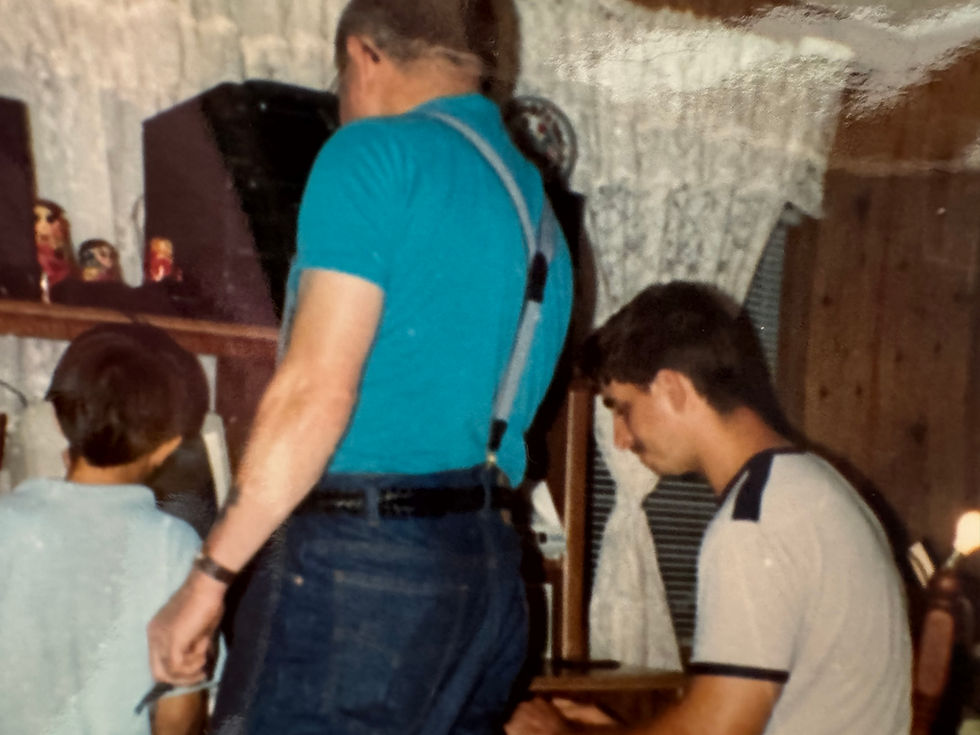
My dad sat in front of a computer for years, wasting his life away.
My uncle did the same while playing World of Warcraft. Many of the men in my family did the same thing.
Then we wonder why there is a male loneliness epidemic.
That world is unrealistic and addictive. It offers instant hits of dopamine without demanding the vulnerability, discomfort, rejection, effort, and responsibility required by real relationships.
A virtual achievement appears.
A level is completed.
A notification arrives.
But the person sitting in the room is still alone.
Screen Time for Kids: The Internet Helped Destroy My Parents’ Marriage
I remember being ten years old and watching my dad spend his life in his bedroom on the computer.
I caught him cheating on my mom by searching through his browser history.
It led to their divorce.
The internet, combined with a lack of character, can create chaos.
Honest to God, I remember thinking:
“One day, I’ll be gone. This opportunity we could have had together will be over, and
he will be alone.”
And guess what?
It happened.
I do not want that happening to me and my children.
I will not let history repeat itself.
Screen Time for Kids: Parenting Means Doing the Unpopular Thing
Parenting means doing the right thing out of love.
It means learning from mistakes—whether our own or those of other people—and
making things right.
It means understanding that your children’s immediate happiness is not always the highest objective.
Sometimes love looks like a boundary.
Sometimes love looks like a separate router.
Sometimes love looks like a child being angry because you refused to let an algorithm
consume another day of a childhood that will never come back.
We will see what happens.
But so far, so good.
My kids are being driven toward a future that is real—not a virtual reality.
What Research Says About Screen Time for Kids
My family’s two-hour rule is a personal parenting decision—not a universal medical
formula.
The American Academy of Pediatrics’ current guidance does not prescribe one identical
screen-time limit for every older child and teenager. It encourages parents to consider
the individual child, the quality and context of the content, and whether media is
displacing sleep, reading, physical activity, family connection, or face-to-face relationships. It also supports family media plans and parental controls across routers, smartphones, tablets, gaming systems, and social platforms.
A randomized clinical trial involving 89 families found that a two-week reduction in leisure screen use was associated with fewer behavioral difficulties and stronger positive social interactions among children and adolescents. The researchers also emphasized that additional research is needed to establish whether those benefits persist over the long term.
CDC data also found that teenagers reporting four or more hours of daily screen time were more likely to report recent symptoms of anxiety and depression than teenagers reporting less than four hours. That association does not prove that screen time alone caused those symptoms, but it reinforces the importance of paying attention to what digital activity may be replacing in a child’s life.
The point is not that every screen is evil.
The point is that childhood should not be surrendered by default.
Five Screen Time for Kids Positive Affirmations
I choose connection over distraction.
My children deserve present attention.
Real life deserves our presence.
Boundaries protect our family bond.
I parent consciously, firmly, lovingly.
Screen Time for Kids: A Question for Self-Reflection
When your children remember this summer, will they remember what they watched on a screen—or how it felt to be fully seen, known, and loved by you?
About the Author—Leslie Juvin-Acker, J.D.

Leslie Juvin-Acker, J.D., is a French-American author, legal educator, executive coach, spiritual teacher, and mother of two. Her work explores law, personal transformation, family, power, education, spirituality, and the uncomfortable realities women are often expected to soften or hide.
As a visual learner who completed law school while raising two young children, Leslie understands the tension between using technology as a necessary tool and allowing it to consume the human experiences it was meant to support. She is the creator of the Law School for Visual Learners series and the author of books designed to help readers think independently, understand complex systems, and take authority over their lives.
Read Leslie Juvin-Acker’s Books

Ready to think more critically, learn visually, and challenge the systems shaping your life?
Buy Leslie Juvin-Acker’s books on Amazon, including her legal education, personal development, and thought-provoking nonfiction work.
Read, question, learn, and refuse to surrender your mind to anyone else’s version of reality.
Invite Leslie to Your Podcast, YouTube Channel, or Television Show

Are you a podcaster, YouTuber, journalist, or television producer looking for a candid, highly educated, spiritually grounded guest who is not afraid to discuss controversial subjects?
Leslie Juvin-Acker, J.D., is available to speak about conscious parenting, children and technology, screen-time boundaries, legal education, personal transformation, women’s leadership, spirituality, social conditioning, family patterns, and the courage required to interrupt generational cycles.
Join the VIP Newsletter and YouTube Community
Join the VIP Newsletter for candid essays, personal stories, spiritual insight, legal commentary, book announcements, videos, and conversations created for intelligent, entrepreneurial, spiritually curious women who want substance—not sugarcoating.
Sign up through Le Jardin d’Amour, then support the community by liking the videos, subscribing to Leslie’s YouTube channel, and sharing the articles that make you think, question, laugh, or finally say out loud what everybody else has been afraid to admit.
Contact and Follow Leslie
Blog: Le Jardin d’Amour
About Leslie: Leslie Juvin-Acker, J.D.
Watch on YouTube: @Authorleslie
#LimitingScreenTimeForKids #KidsScreenTime #DigitalParenting #ScreenTimeLimits #ParentalControls #FamilyMediaPlan #ConsciousParenting #IntentionalParenting #ParentingBoundaries #FamilyConnection #ParentChildConnection #DigitalDetox #ScreenFreeKids #HealthyTechHabits #OnlineSafetyForKids #ChildrenAndTechnology #TeenScreenTime #SocialMediaSafety #RealLifeChildhood #RaisingResilientKids #EmotionalIntelligence #SummerParenting #BooksForKids #ReadingKids #BrainRot #TechAddiction #ModernMotherhood #EntrepreneurialWomen #LeslieJuvinAcker



Comments